

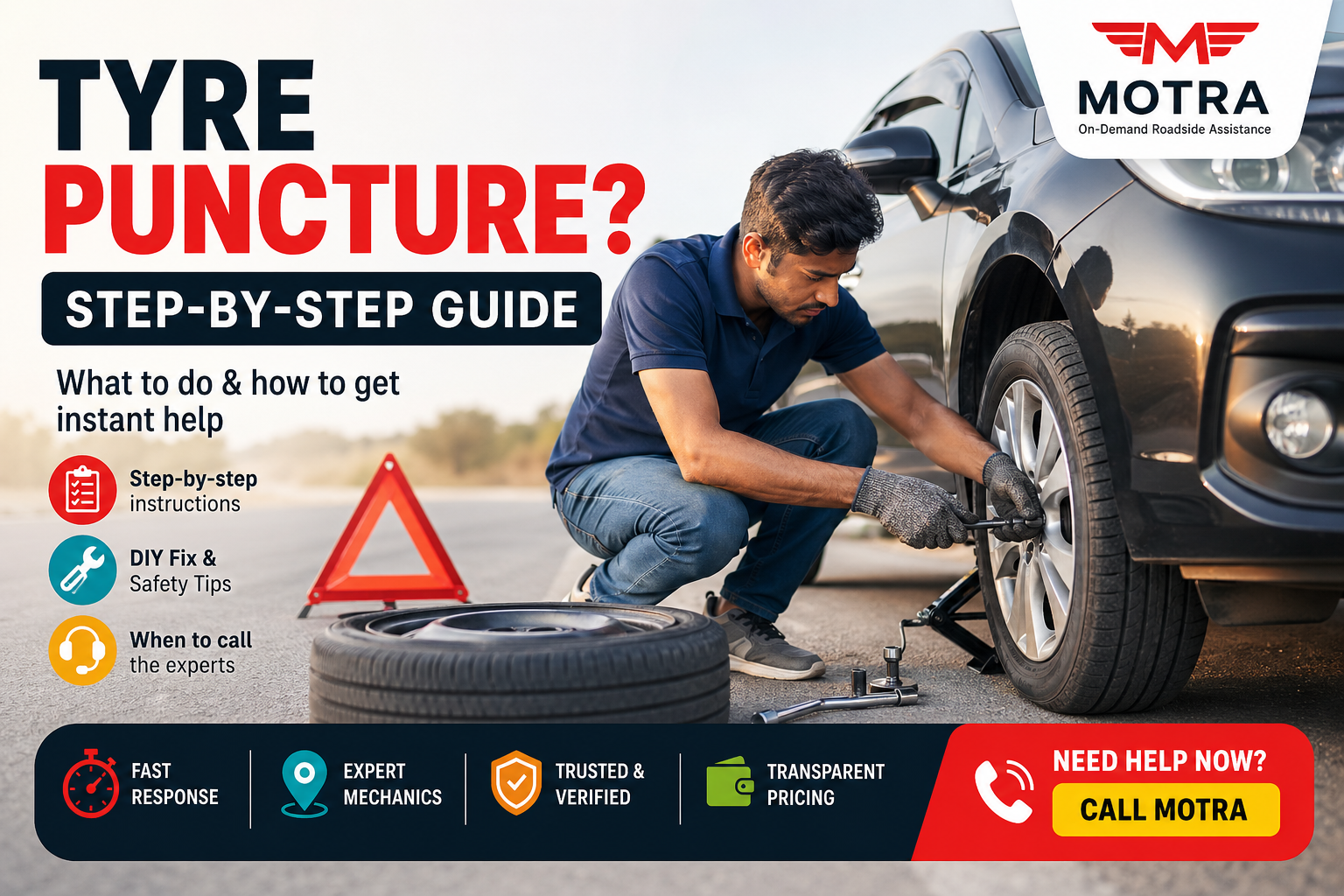
Stuck with a flat tyre? Don’t panic.
Follow this step-by-step guide—or skip the hassle and get instant help from Motra.
👉 Call Now | Book Puncture Service | Get Help Near You
Tyre punctures happen unexpectedly and can be dangerous if not handled correctly. In this guide, we explain exactly what to do when a tyre punctures, focusing on safety and step-by-step actions. We start by safely stopping your vehicle – easing off the accelerator, using hazard lights, and pulling over well out of traffic. Once stopped, secure the car (handbrake on, wheels chocked) and move passengers to safety. Next, assess the damage: check the tyre sidewall and tread. If damage is severe or the tyre is flat, decide whether you can use a repair kit/spare or need professional help. For small punctures (e.g. nail in tread under ~6mm), emergency sealant kits or plugs can get you going. Otherwise, changing to a spare tyre or calling a breakdown service is safest
🚨 Emergency? Get Help in 15 Minutes
Stranded right now?
Skip the stress.
👉 Book instant tyre repair with Motra
📞 Call Now: 9677496118
📍 Available at your location (home, office, roadside)
Why Tyre Punctures Happen
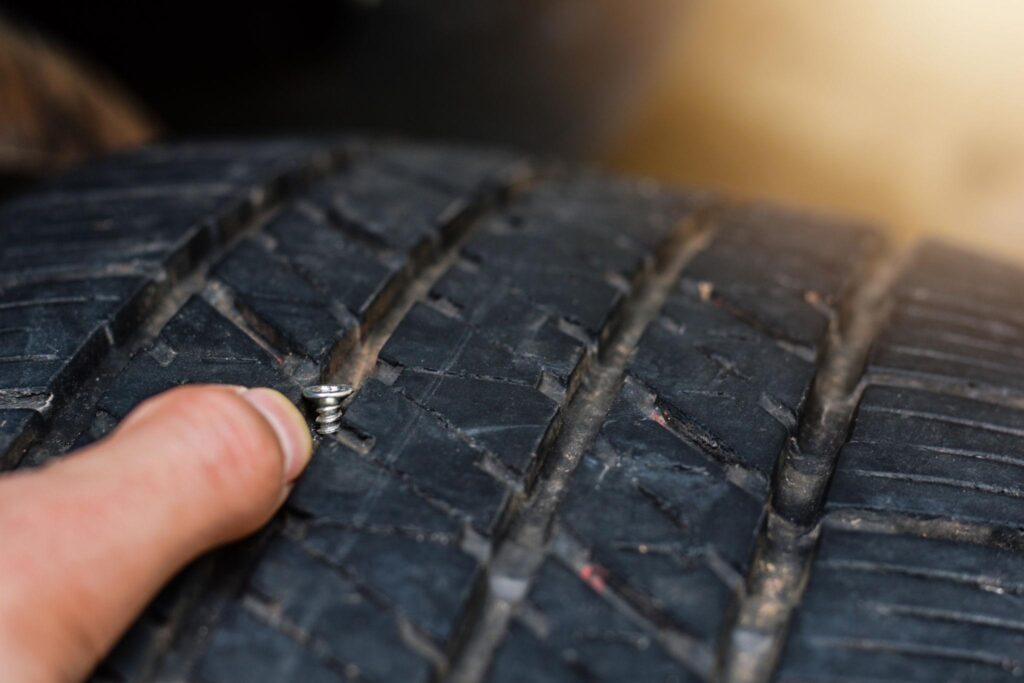
- Sharp objects (nails, glass)
- Bad roads & potholes
- Worn-out tyres
- Wrong tyre pressure
- Valve damage
1) What to Do Immediately:
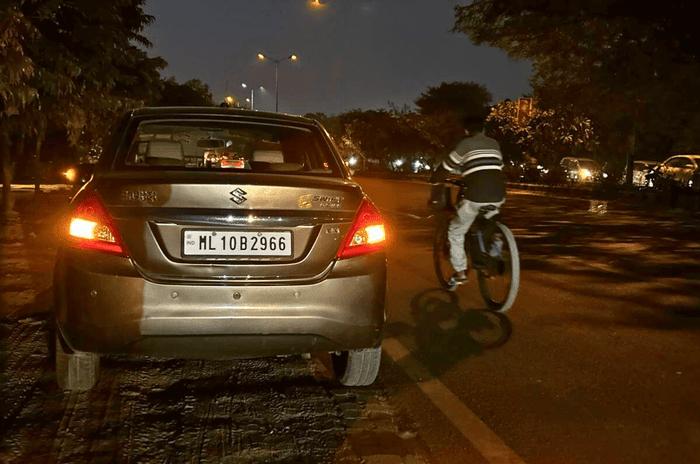
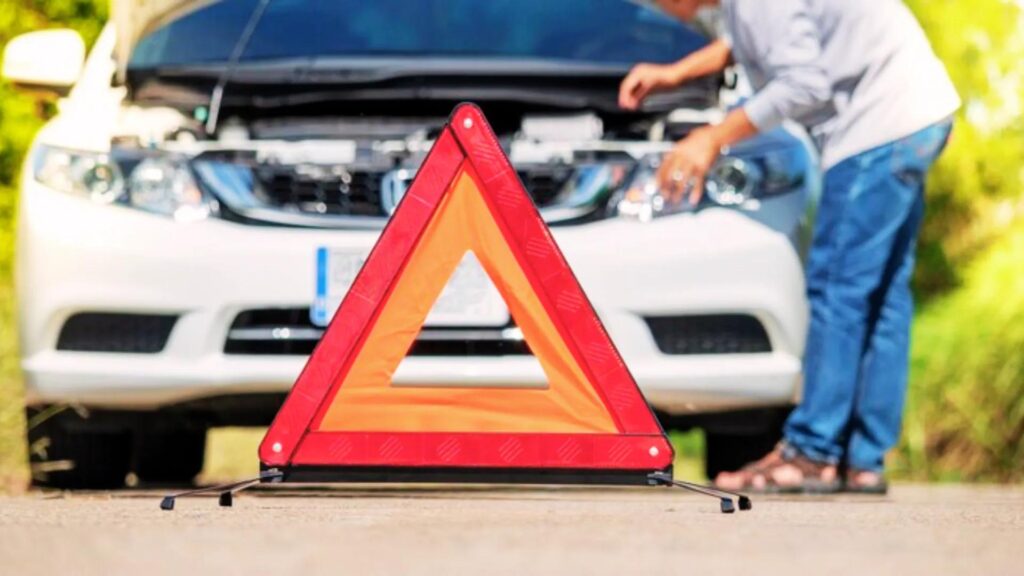
- Stay calm and slow down gently. Do not slam on the brakes. Holts Automotive advises easing off the accelerator and decelerating with engine braking, keeping a firm grip on the steering wheel. Abrupt braking can worsen the puncture and handling.
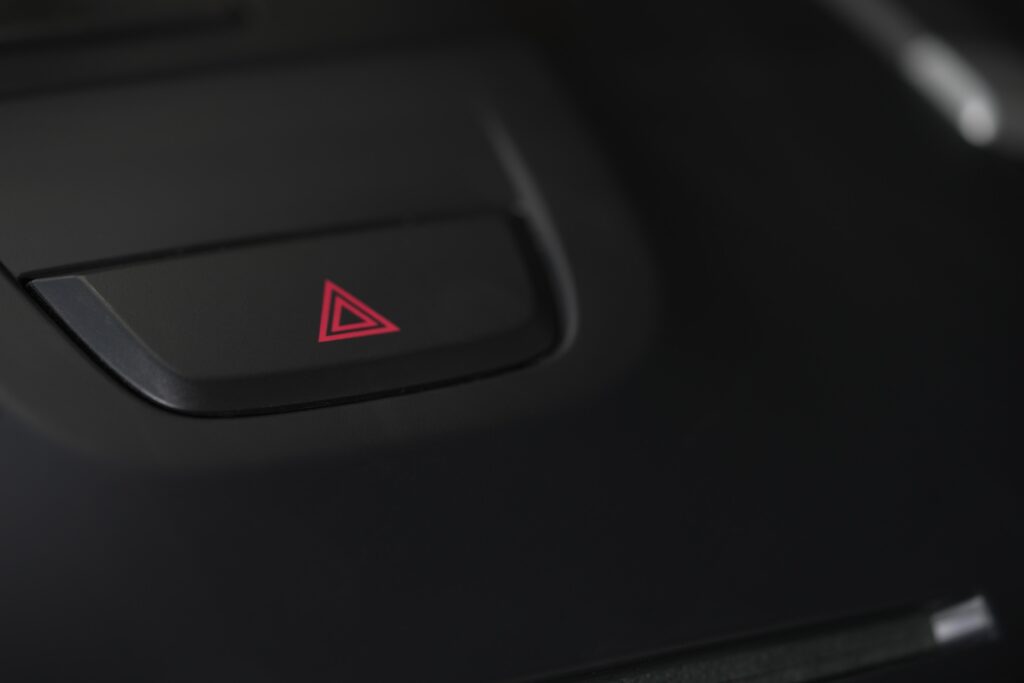
- Turn on hazard lights. Alert other drivers that you have an emergency. On narrow roads or highways, this alerts traffic behind you.
- Find a safe spot to stop. Look for a lay-by, shoulder, or wide verge. On a motorway, use the hard shoulder; on busy roads, seek the next safe turnout. Avoid stopping on blind corners or where traffic is heavy.
- Secure your vehicle. Once stopped, put the car in park (or in gear if manual) and apply the handbrake. Place wheel wedges or rocks behind other tyres if available to prevent rolling.
- Ensure everyone’s safety. Turn off the engine, exit on the curb or passenger side away from traffic, and keep passengers behind guardrails or barriers if possible. Make sure everyone stands well away from the roadway and on stable ground.
2) Inspect the Tyre
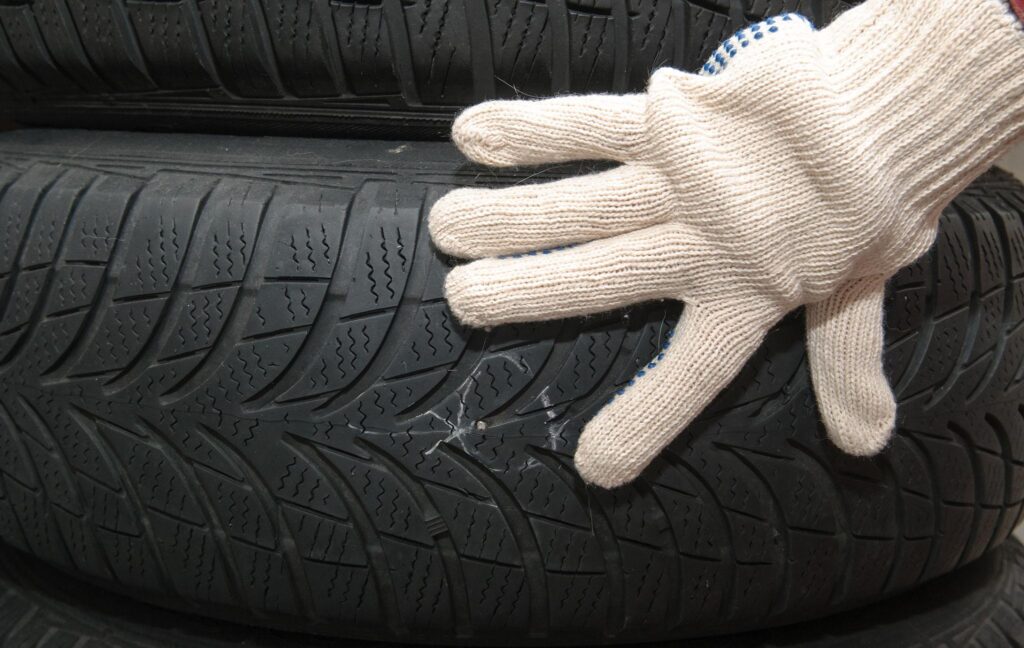
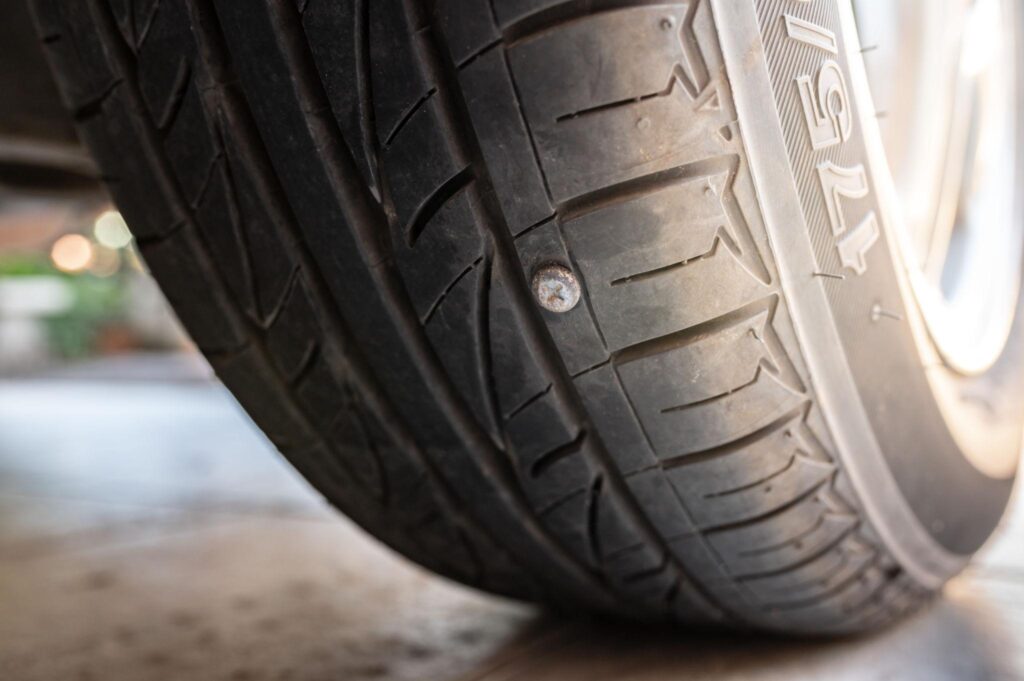
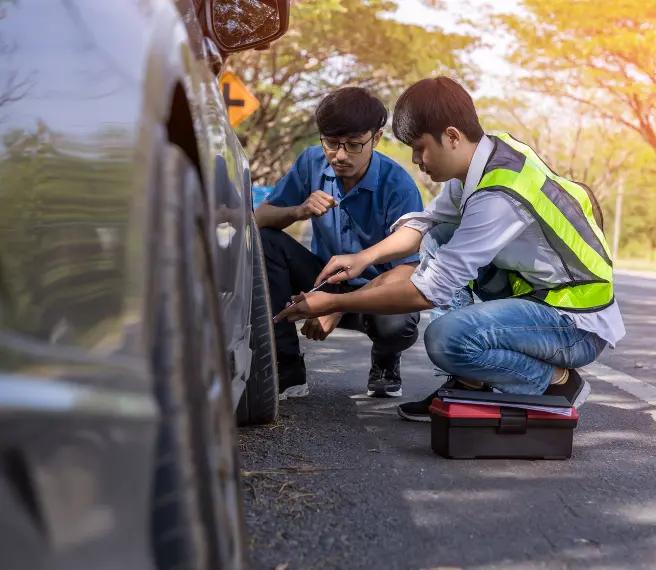
- Identify the punctured tyre
- Look for nails, cuts, or damage
- Decide: repair or call help
3) Replace with Spare Tyre
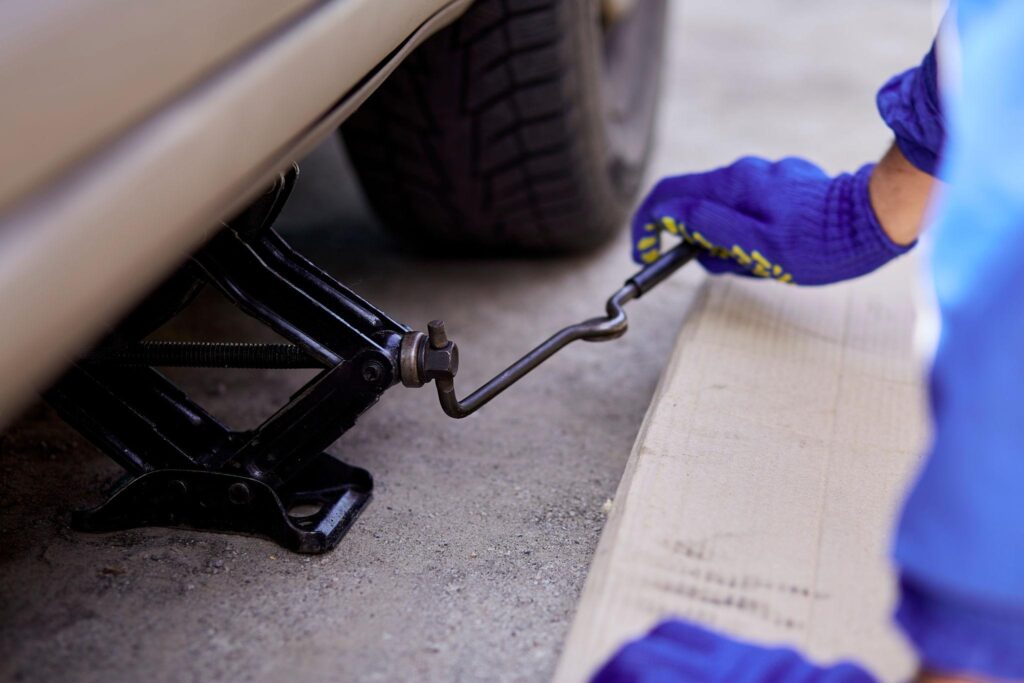
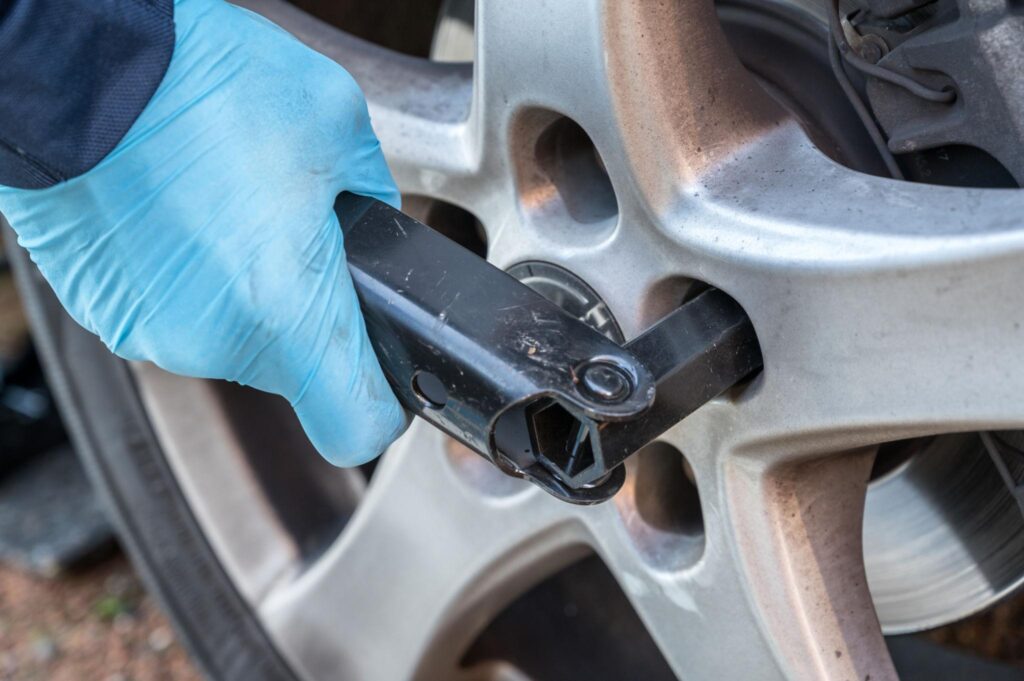
- Get tools (jack, wrench, spare)
- Loosen nuts
- Lift car
- Remove flat tyre
- Fix spare
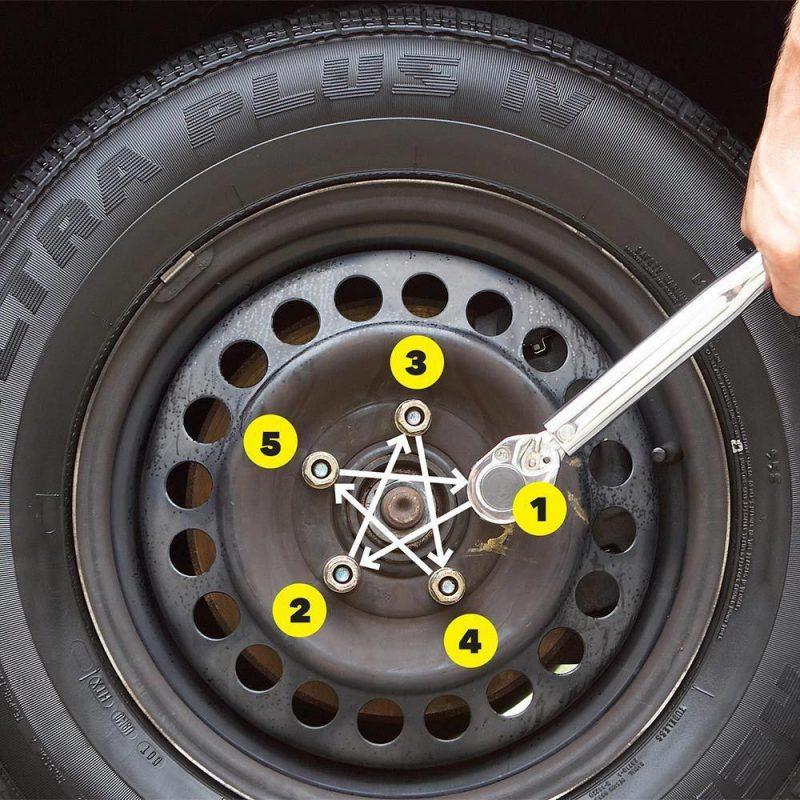
- Tighten nuts
- Lower vehicle
4) Temporary Fix (Repair Kit)
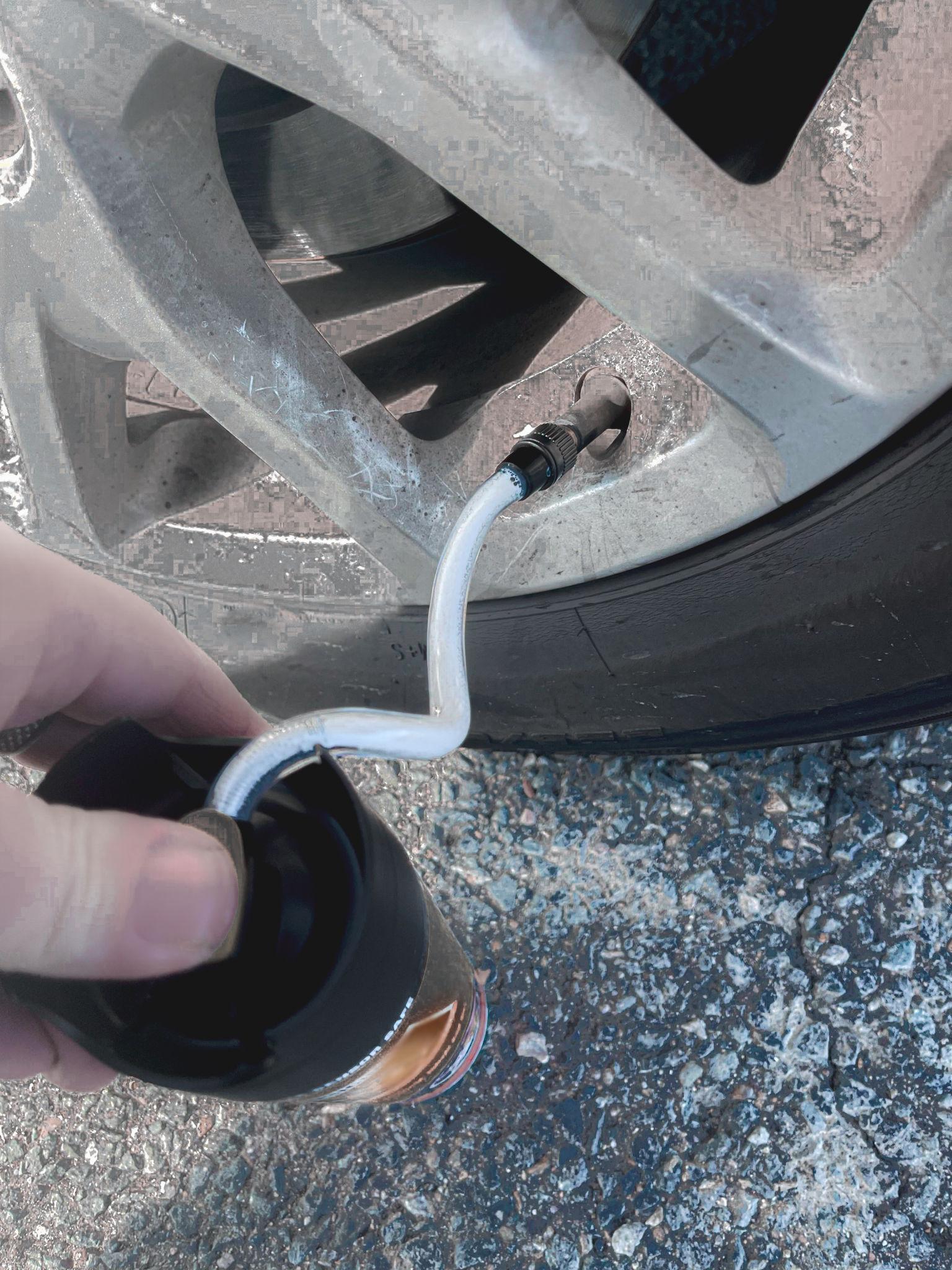
- Locate puncture
- Apply sealant
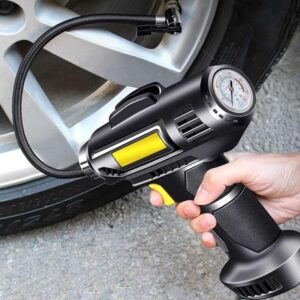
- Inflate tyre
- Drive slowly to service
⚠️ Temporary only.
1. Prepare to fix or change the tyre:
- Lay out your tools: jack, lug wrench, spare tyre (if available), repair kit, and a pump.
- If using a repair kit, read instructions carefully (all brands differ slightly). Wear gloves.
- For tubed tyres (common on motorcycles or some older cars), use an inner tube patch kit. For tubeless tyres, you can use plugs or sealant.
2. Using a sealant or plug (temporary fix):
- Sealant spray: Shake the can well. Remove tyre valve cap, attach hose, and spray recommended amount into tyre. Inflate as needed. The sealant coats the inside and seals small punctures. Drive carefully to the nearest repair shop.
- Tire plug kit: Insert the reamer tool into the puncture to clear debris. Thread the rubber plug into the insertion tool and push it into the hole until two-thirds inside. Pull the tool out, leaving the plug in place. Trim excess. Inflate the tyre. This is quick (5–15 minutes) but remember it’s temporary.
3. Changing to a spare tyre:
- If you have a spare and the puncture is large or on the sidewall, it’s often safer to replace the tyre immediately.
- Loosen the lug nuts slightly before jacking up. Then raise the car until the wheel is off the ground. Remove the flat tyre and put on the spare. Tighten nuts by hand, lower the car, then fully tighten in a criss-cross pattern.
- Note: Space-saver spares usually limit you to ~50 mph and under 50–80 km total.
4. Drive carefully to a service point:
After a temporary fix or spare change, drive slowly (no more than 40-50 km/h) to the nearest tyre shop or garage. The repair or spare may not handle highway speeds well. If you used a sealant, it’s crucial to clean out the tyre and get a permanent patch done by a professional. TyreSafe and Michelin both stress that even after an emergency fix, you should have the tyre fully inspected and properly repaired
✅ DIY vs Motra: What’s Better?
| Factor | DIY Fix | Motra Service |
|---|---|---|
| Time | 20–40 mins | 10–20 mins |
| Effort | High | Zero |
| Safety | Risky | Safe |
| Tools Needed | Yes | No |
👉 Smart choice: Motra
🚗 Why Choose Motra?
🚗 On-demand puncture repair
⏱️ Fast response
📍 Real-time tracking
💰 Transparent pricing
🛠️ Verified mechanics
Common Mistakes & Safety Warnings
- Braking hard: Slamming brakes can spin the wheel on a flat and scrape or buckle the rim. Always ease off the throttle instead.
- Jacking on a slope: If possible, pull onto a level surface to jack up the car. Unstable ground can cause the jack to slip.
- Overinflating with sealant: Follow the kit instructions. Overinflating can burst the tyre or damage sensors.
- Ignoring sidewall punctures: Unlike the tread, sidewalls flex too much and cannot hold a plug; repairing them is unsafe.
- Not tightening lug nuts properly: Under-tightened nuts can come loose; overtightened can strip studs. Use a cross pattern.
- Driving too fast after repair: Emergency fixes are not long-term; stay cautious.
Leave a Reply