Driving in the rain can be dangerous if the windshield is covered with water, dust, or mud. One of the most important safety components in any vehicle is the windshield wiper system. It helps drivers maintain a clear view of the road during rain, fog, or dirt accumulation on the glass.
Even though windshield wipers look simple from the outside, they involve a clever mechanical and electrical system working together. The system converts electrical energy into mechanical motion, which moves the wiper blades across the windshield to remove water and debris.
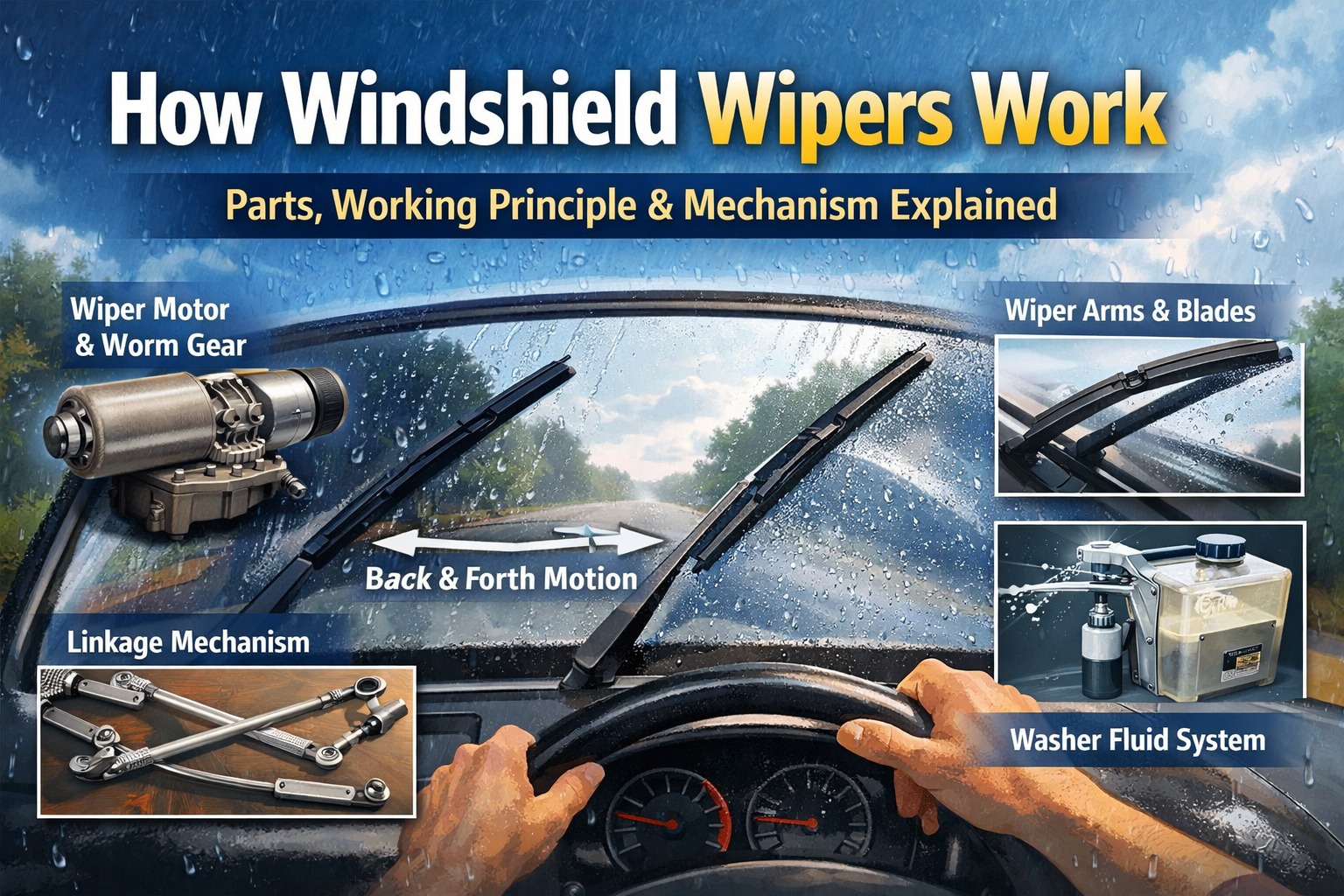
In this detailed guide, we will explore how windshield wipers work, their main components, working mechanism, motion cycle, and modern features in easy-to-understand language.
What is a Windshield Wiper System?
A windshield wiper system is a mechanical and electrical device installed on vehicles to clean the front glass (windshield). It wipes away rainwater, dust, mud, and insects, ensuring the driver can see the road clearly.
Without windshield wipers, driving during rain or storms would be extremely dangerous. This is why wipers are considered a critical safety feature in every vehicle, including cars, trucks, buses, and SUVs.
The wiper system works by converting electrical power from the vehicle battery into a back-and-forth sweeping motion that moves rubber blades across the windshield.
Basic Working Principle of Windshield Wipers
The working principle of windshield wipers is simple but smart. The system transforms rotational motion from a motor into oscillating motion that moves the blades back and forth.
Step-by-Step Working
When you switch ON the windshield wipers:
- The driver activates the wiper switch from the steering column.
- The switch sends a signal to the relay or control module.
- Electrical power flows from the car battery to the wiper motor.
- The motor begins rotating continuously.
- A linkage mechanism converts the circular motion into a sweeping motion.
- The wiper arms move back and forth across the windshield.
- The rubber blades wipe away water and dirt from the glass.
This entire process happens within seconds and continues until the driver switches the system off.
Most vehicles also include a washer system that sprays cleaning fluid onto the windshield before wiping. This helps remove stubborn dirt, insects, and dust.
Core Mechanism Inside the Wiper System
Inside the windshield wiper system is a smart combination of electrical and mechanical components that work together efficiently.
Two key concepts make the system effective:
1. Electric Motor
The heart of the wiper system is a small DC electric motor. This motor receives power from the vehicle battery and produces rotational motion.
However, the motor spins very fast, which is not suitable for moving wiper blades directly. That is why additional mechanisms are used.
2. Worm Gear Mechanism
To control speed and increase power, the system uses a worm gear reduction mechanism.
This mechanism does two important things:
• Reduces speed of the motor
• Increases torque (force)
Because of torque multiplication, the wipers can move strongly even during heavy rain or strong wind resistance.
The worm gear also prevents reverse motion, which helps keep the wipers stable.
Main Parts of a Windshield Wiper System
A windshield wiper system consists of several components working together. Each part has a specific role in the wiping process.
1. Wiper Motor
The wiper motor is the main power source of the system.
Features
• Small DC electric motor
• Usually installed under the hood near the firewall
• Generates rotational motion
• Operates using 12V power from the car battery
The motor continuously rotates while the wiper system is ON. This rotation is later converted into sweeping motion.
2. Gear Reduction System (Worm Gear)
The gear reduction mechanism is connected to the motor.
Its main functions include:
• Increasing torque
• Reducing motor speed
• Ensuring smooth wiper movement
Without this system, the motor would spin too fast and the wipers would not function properly.
3. Linkage or Transmission Mechanism
The linkage system is responsible for converting rotary motion into back-and-forth motion.
Components inside linkage
• Metal rods
• Pivot joints
• Connecting arms
This mechanism connects the motor to the two wiper arms, ensuring they move in synchronization.
Because of this linkage system, both wipers sweep across the windshield together.
4. Crank Arm and Connecting Rods
The crank arm plays a key role in motion transfer.
It works like a push-pull mechanism, similar to how pedals move a bicycle chain.
Function
• Transfers motor rotation into linkage motion
• Converts circular movement into oscillating motion
• Drives the wiper arms step-by-step
This mechanism allows the wipers to move smoothly across the glass.
5. Wiper Arms
The wiper arms are the metal arms that hold the blades.
Important features
• Made of strong lightweight metal
• Spring-loaded to maintain pressure on the glass
• Connected directly to the linkage mechanism
The spring ensures that the blades stay pressed firmly against the windshield so they can clean properly.
6. Wiper Blades
The wiper blade is the actual cleaning component.
Blade materials
• Natural rubber
• Synthetic rubber
• Silicone rubber
The blade works like a squeegee, removing water and debris from the glass.
If the blade becomes worn or cracked, the wipers may leave streaks or noise on the windshield.
7. Control Switch and Relay
The wiper switch allows the driver to control the system.
It is usually located on the steering column.
Available controls
• Low speed wiping
• High speed wiping
• Intermittent wiping
• Washer spray activation
In modern vehicles, the signal from the switch goes to a relay or Body Control Module (BCM), which then powers the motor.
8. Washer System
Most vehicles include a windshield washer system to assist the wipers.
Main components
• Washer fluid reservoir
• Electric pump
• Spray nozzles
When activated, the pump sprays cleaning fluid onto the windshield, making it easier for the wipers to remove dirt and insects.
Wiper Motion Cycle (Step-by-Step Process)
Let’s understand how the windshield wipers move during operation.
Step 1: Driver activates the switch
The driver turns ON the wiper switch from the steering control.
Step 2: Electrical power is supplied
The relay or control module sends 12V electrical power to the wiper motor.
Step 3: Motor begins rotating
The electric motor starts spinning continuously.
Step 4: Motion conversion occurs
The linkage and crank arm convert the rotating motion into oscillating motion.
Step 5: Wiper arms sweep across the windshield
The wiper arms move left and right across the glass, removing water and debris.
Step 6: Automatic park position
When the driver turns OFF the wipers, the system automatically returns the blades to the bottom of the windshield, known as the park position.
This ensures the blades do not block the driver’s view when not in use.
Types of Modern Windshield Wiper Features
Modern vehicles include advanced wiper technologies to improve convenience and safety.
Intermittent Wipers
Intermittent wipers operate with time intervals instead of continuous wiping.
This is useful during light rain or drizzle, where constant wiping is not necessary.
Variable Speed Control
Drivers can adjust wiping speed depending on the rain intensity.
Common speed options include:
• Low speed
• High speed
• Intermittent mode
Rain-Sensing Wipers
Some modern cars include automatic rain sensors.
These sensors detect moisture on the windshield and automatically activate the wipers.
The system can also adjust the speed of wiping based on rain intensity.
Rear Windshield Wipers
Rear wipers are commonly found in:
• Hatchback cars
• SUVs
• Crossovers
They help clean the rear windshield, especially during rain or muddy road conditions.
Common Problems with Car Windshield Wipers
Even though wipers are simple systems, they can sometimes develop problems.
Common issues include
• Wiper blades leaving streaks
• Wipers moving slowly
• Wiper motor failure
• Linkage damage
• Washer pump not working
Regular maintenance and blade replacement can prevent most of these issues.
Maintenance Tips for Windshield Wipers
To keep your Car windshield wipers working properly, follow these tips:
Replace blades regularly
Wiper blades should be replaced every 6–12 months.
Clean the blades
Dirt buildup on blades can reduce wiping efficiency.
Use a wet cloth to clean the rubber edges.
Refill washer fluid
Always keep the washer fluid reservoir filled for better cleaning.
Avoid using dry wipers
Running wipers on a dry windshield can damage the blades.
Always use washer fluid when cleaning dirt.
A Simple Real-Life Example to Understand Wiper Mechanism
To understand the system easily, imagine this:
• Motor = Electric fan motor
• Linkage = Hand converting rotation into push-pull motion
• Wiper arm = Your hand holding a cloth
• Blade = Cloth cleaning the glass
Just like your hand moves a cloth across a surface to clean it, the wiper system moves blades across the windshield.
Why Windshield Wipers Are Important for Safety
Car Windshield wipers are not just a convenience feature — they are essential for safe driving.
During rainstorms, visibility can drop quickly. Wipers help remove water instantly, allowing the driver to see the road, traffic signals, and obstacles clearly.
Without properly functioning wipers, the risk of accidents increases significantly.
Conclusion
The car windshield wiper system may appear simple, but it is a clever combination of electrical engineering and mechanical design. By converting electric motor rotation into a controlled back-and-forth motion, the system efficiently removes water, dirt, and debris from the windshield.
The main components — including the motor, worm gear, linkage mechanism, wiper arms, and blades — all work together to ensure clear visibility during challenging weather conditions.
Modern cars now include advanced features like intermittent wiping, rain sensors, and automatic speed control, making the system even more intelligent.
Regular maintenance, such as replacing worn blades and keeping washer fluid filled, ensures that windshield wipers continue to perform effectively.
In the end, this small yet powerful system plays a huge role in keeping drivers safe on the road.